Tuesday, 26 June 2012

Color Psychology in Identity and Branding


Posted by: , In: Design, On: June 26, 2012 | 4 Comments
“Color is mysterious, eluding definition; it is a subjective experience, a cerebral sensation depending on three related and essential factors: light, an object and an observer.”Enid Verity, Color Observed, 1980
The fascination with the concept of color draws its origins from the Classical Greece time period, when scientist and philosopher Aristotle developed the first known color theory scheme. He was also among the first to compare colors to music, in order to produce definitions for conceptual logic and believed that they were sent from the heavens as rays: “in a sense, light makes potential colors into actual colors”. He identified four colors as corresponding to the basic natural elements: earth, air, water and fire.
  
Since then, numerous other scientists such as Sir Isaac Newton and Johann Goethe have shown significant interest in the subject. Goethe, although mainly recognized for his literary masterpiece Faust, regarded his 1810 Theory of Colors (Farbenlehre) as his greatest achievement.
We will discuss today practical applications of the existing color theories in the identity branch of graphic design: logos and branding. In 1855, Hermann Helmholtz pointed out masterfully that “We never perceive the objects of the external world directly. On the contrary, we only perceive the effects of these objects on our own nervous apparatuses, and it has always been like that from the first moment of our life”. The particular effects that colors have on our psyche and how designers make use of them in their projects is the essence of this branding introspection.

Colors and Brain Processes

In Betty Edwards’ “Color: A Course in Mastering the Art of Mixing Colors”, we find an innovative idea meant to help art students better perceive colors: seeing them as values. Edwards addresses the incongruencies in the artistic educational process in schools and states that students should first learn how to draw, then some basic color theories and only then how to paint. She bases this allegation on a fragment from “The Complete Letters of Van Gogh”, vol. I: “I have attached great value to drawing and will continue to, because it is the backbone of painting, the skeleton that supports all the rest”.
What does Edwards mean exactly? Learning how to see and draw colors as shades of gray, in relation to a gray scale, which gradually passes from white to black. Students need to be able to associate colors with the existing shades in the scale, which is difficult since some colors are automatically perceived as pale or dark when that is not actually the case.
Why is this essential? An accurate perception of the value levels of colors enables artists to arrange shapes, spaces and contrasts – which purposefully creates a beautiful composition.
As an interesting piece of information, Renaissance painters developed a method called grisaille to avoid possible color mishaps in their art. The term comes from the French equivalent of “gray”, gris and designates a process preceding the actual oil painting. They created a monochrome underpainting, usually in shades of gray, that resembled drawings and allowed the artist to then mix hues and faithfully depict the lighted and shaded areas. Similarly, the brunaille (brown) and verdaille (green) techniques appeared.
How does this translate into graphic design? The grisaille method can also be successfully applied in logo design, as designer David Airey points out in his book “Logo Design Love: A Guide to Creating Iconic Brand Identities”. He offers as an example 160over90, a design agency from Philadelphia, U.S. that handled the Woodmere Art Museum’s rebranding project. They made a habit out of pitching their top logo choices to their clients in black and white, since they found that colors made them biased. This is an excellent tip that can be applied both in personal projects and working for others.
Edwards also concludes that scientifically speaking, drawing makes use of the visual and perceptual functions belonging to the non-verbal right hemisphere of the brain, without interference from the verbal left-side brain. On the other hand though, the input of the left hemisphere of the brain is needed for mixing colors, and respectively painting. This causes a slight shift in consciousness – different from the brain’s usual state – which artists usually perceive as entering a creative and inspired “zone”.
“In fact, the field of colors is a territory with ragged borders located somewhere between the sciences and the arts, between physics and psychology, a land whose configuration constitutes a border between these two diverse cultures.” Manlio Brusatin, “A History of Colors”, 1991

Color Symbolism and How It Affects the Human Psyche

The symbolic meaning of colors is a disputed field since each color is an ambiguous territory; they’re supposed to have both positive and negative connotations, which does not sit well with the scientific community. In the following chapter, we will undertake a journey in the depths of basic color symbolism and the way it influences the human mind. Thus you, the designer, will better grasp the colors’ subtle nuances and know how to use them according to your clients wishes, but also their and their target audience’s nationality.
As a graphic designer working specifically on identity and branding projects, you make use of a limited number of colors and you must be able to convey a certain message and generate an emotional response from the clients and their audience through your logo design. So, more so than other designers that create complex vector illustration, patterns, textures and so on, one of the essential abilities you should hone is color know how. This translates not only into color harmonizing skills, but also in mastering basic color symbolism, because it permeates all the fields succeeding the final stage of the design process.
“In symbolism, the purity of a color corresponds to its symbolic purity: The primary colors to primary emotions, and secondary and mixed colors to symbolic complexity.” Verity, “Color Observed”
White traditionally represents purity and innocence in Western cultures (bridal and baptism dresses), while in Oriental and African cultures it is the color of death – once again a sign of the purity of the departed one’s soul. In the famous Chinese theatre masks, white also designates a frightful person, as opposed to the Occidental representation of cowardice – yellow.
Black specifically stands for death, evil, hell, damnation and general negative connotations. On the opposing end are the ancient Egyptians, for whom it represented life, fertility and growth, because it was the color of the Nile Delta soil. Due to the association with the night, black can also express mystery and the unknown, while it is the symbol of ultimate elegance and simplicity in the fashion world.
Red is usually associated with stimulation, passion, virility and danger. Out of all the other colors, it is the one that generates the most widespread agreement among researchers. In ancient Rome and Greece, it was the color associated with war, while in the Christian church it is found on the priests’ garments. In Russia, it is the color of freedom, because of the flags waved during the revolution against the czars. In China, red is a customary color for wedding dresses, while in other colors it’s traditionally worn at burials. In America, it symbolizes love, action, dynamism and power (the stripes on the national flag and Valentine’s Day, for example).
Yellow is considered by researchers to be the most ambiguous of colors. It symbolizes characteristics and feelings on opposing ends of the spectrum. On the one hand, it is a sign of happiness, intellect and enlightenment, while on the other hand it represents cowardice, envy, deceit and betrayal. Think about the fact that for almost 300 years, during the Chinese Ch’ing dynasty, only the emperor wore yellow; also, according to Christian beliefs, Judas wore a yellow garment when he betrayed Jesus Christ with a kiss.
Blue is the most mysterious of colors due to the fact that although it practically surrounds us, being the color of the sky and water, it is absent from the earliest writings such as the Bible and all of Homer’s works. Today, it generally represents sadness and melancholy (see Picasso’s “blue period”), but also authority (the typical dark blue suits of elected officials) and vast distances.
Green is generally agreed to represent youth, hope and new life; it also stands for action (“Green means go”) and eco-friendliness (“Think green”). Furthermore, in England it is associated with the heroic figure of Robin Hood and in Islam, it is the color of the Prophet Mohammad, which practically renders it sacred.
Orange contains curiously little hidden meaning. There are no expressions that tie it with feelings, as opposed to feeling blue, being in a black mood, being yellow or thinking green. It is usually associated with heat, warmth and energy and is recognized for being the color of the Buddhist monks’ robes.
Purple is the closest in value to black, due to the fact that it reflects so little light. It is generally associated with deep feelings in all artistic fields, royalty (because it was worn by the ruling class in times when purple dye was very expensive) and bravery (the honorary medal for courage is the “Purple Heart”).

Conclusion

We can certainly emit a recipe to cap with success the color choosing process in identity and branding: mix your client’s preferences with the subjective meaning of colors that we discussed above, your knowledge of color harmonizing (“complementary colors, varied by transforming the original colors and their complements to varied values and intensities”, Betty Edwards, “Color: A Course in Mastering the Art of mixing colors”) and your mastering of the appropriate responses from the brain in reaction to specific colors.


Source: http://designmodo.com/color-psychology/#ixzz1yvxsuhMA


Source: http://designmodo.com/color-psychology/

Android GUI Designs


Android Customizations – Creative Android GUI Designs


Android phones are trending these days, and every Android user, at-least me, love to customize the Interface. We have gathered most amazing Android Customizations and most perfect Android GUI Designs this time. I love customizing android with apps. And since there are lot of ROMs available, I change my ROM quite frequently when I get bored with my Homescreen interface.
I am currently using MIUI Rom on my Android Phone, and MIUI is the best ROM for android a designer should have. It offers variety of design customization options, like switching themes, custom boot animation, wallpapers and much more. These Android Customizations are the best Customizations I have ever seen in my life.

Best Android Customizations

Android Customizations - Creative Android GUI Designs
Hope you liked all these Android GUI Designs. I love them and I am cloning some of them using Launchers and Customization Apps. Androids are easy to customize once rooted and flashed with custom roms. There a lot of personalization android apps on Play Store. One of them is Minimalist Text, which is my favorite, and also used in most of the above android screenshots.
Minimalist Text helps you design your own Clock Widget fro your Homescreen, with advanced customization options. Another apps which helps me for Android Customization are launchers, I mostly use the default MIUI Launcher, but apart from this, I use either Apex Launcher or GoLauncher.
Well, there are some more launchers which I have tried like MiHome and QQ Launcher which gives your phone attractive look. Apart from using apps, Wallpapers also add some feeling to your phone. So, get the best wallpapers, you can use the Wallbest and Picspeed Wallpaper app to get the best looking wallpaper for your android phone.

Saturday, 23 June 2012

Monday, 18 June 2012

Kevin Rose

 img source: intomobile.com


Kevin Rose is a serial entrepreneur and Venture Partner at Google Ventures. Previously Kevin founded Digg, co-founded Revision3 (acquired by Discovery Channel) / Milk Inc. (acquired by Google). Kevin currently serves on the board of directors of the Tony Hawk Foundation.
He has been featured on the cover of Inc. Magazine, BusinessWeek, and RedHerring. Kevin was named a "Top 25 Angel Investors (#14)" by Bloomberg, "Top 25 Web Celebrities" by Forbes, "Top 25 Most Influential People on the Web" by Time and BusinessWeek magazines, and one of MITs "Top 35 Innovators under 35".
Patents
7,831,928 - Content Visualization 
Investments360buy
3Crowd Technologies
about.me (advisor, acquired by AOL)
Blippy (advisor)
Chomp (advisor)
Digg
Dailybooth
Facebook
fflick (acquired by Google)
Fab
Foodzie
Formspring
Foursquare
Gowalla
ngmoco (advisor, acquired by DeNA)
OMGPOP (acquired by Zynga)
Path
Revision3 (co-founder, acquired by Discovery Channel)
SimpleGeo
SixApart (advisor, acquired by SAY Media)
Square
Tasty Labs
Taykey (advisor)
Twitter
Yobongo
Zynga 
Fund InvestmentsGreylock XIII Fund
SV Angel III
Crunch Fund 
Charities
The Well, Charity: Water
The Tony Hawk Foundation 

    Amir Khella

    http://www.amirkhella.com

    Tuesday, 22 May 2012

    Web apps vs desktop apps


    Web apps vs desktop apps

    In this article I will compare the web and desktop applications, show the major events in the web app development industry for the last 6 years and based on that try to predict how the web apps will compete with desktop apps in the next years. I will start by showing advantages and disadvantages of using web apps over desktop apps.

    Comparing web apps and desktop apps

    Advantages for users

    • no installation and updating
    • access from anywhere with the internet
    • data is stored remotely
    • cross-platform compatibility
    • better suitable for low-end computers and require little disk space
    • client computer is better protected from viruses as the app is sandboxed inside a browser

    Disadvantages for users

    • desktop applications have better user experience
    • require internet access
    • the remote server could be compromised leaking private information

    Advantages for developers

    • easier to monitor every user actions, get full statistics and feedback
    • you can choose to completely control the server-side code making it impossible to pirate
    • easier to add collaboration possibilities as data is stored on the server
    • easier to make a mobile version if you use HTML and JS
    • easier integration with web services

    Disadvantages for developers

    • as it isn’t a native application it has a lot of restrictions and limitations
    • less tools and frameworks for development
    Web applications have a lot of advantages, for example, they don't require installation and updating which saves a lot of administration work for large companies. They're also good for users who have more than one computer, as all their data and preferred software is accessible on multiple devices.
    It also becomes more important that web applications are cross-platform and work on different OS.
    However, web apps have some serious disadvantages. The most important problem with web apps right now is their poor user experience, because of the performance problems and browser limitations. But computer processing power is getting faster exponentially (by Moore's law), and if you combine it with the browser performance improvements, we can be sure that this problem will be solved very soon.
    Another major limitation of the web apps is the requirement of the internet connection. But this changes quickly, as mobile internet and mobile broadband becomes faster and cheaper. Land-line internet access also becomes more common. Take a look at the following chart.
    Percent of households with internet access in UK
    Internet access data from statistics.gov.uk 2002-2005 for GB 2006-2009 for UK Computer usage data is not reliable2002 2004 2007
    This data is for the UK, but it is probably more or less the same for most European countries and the USA. The data for the percentage of households with computers is not reliable, but it's good enough for comparison.
    As you can see, the number of households with the internet connection grew for an average of 3.4% each year for the last 7 years, and if this trend will continue then after a few years the lack of internet connection won't be a problem anymore.
    Another possible solution for this problem is the offline application cache and local data storage implemented in the Safari and latest Firefox.
    For some types of applications like mail clients and collaboration tools the advantages of web apps already outweigh the disadvantages, and number of good use cases for web apps will only increase.
    To support my point of view, I would like to show you how the new types of web apps appeared and improved in the last 6 years.

    Evolution of web apps

    2004

    web apps 2004
    Images from extremetech and techcrunch
    Important events:
    • Gmail beta released
    • Oddpost was purchased by Yahoo! and became the new version of their mail service
    • The term "Web 2.0" began its rise in popularity
    • 37signals launch Basecamp, a web-based project management tool
    • First version of Adobe Flex released
    • Wordpress (which appeared in 2003) adds support for plugins
    • Bloglines (web-based news aggregator) included in Time Magazine's Top 50 Web Sites
    • Flickr (image hosting) was launched
    We will start with 2004, when some important events happened. Most of the web applications at that time were very very slow. And some popular ones like Oddpost just recently removed their dependency from Windows and Internet Explorer. The release of Gmail showed that the open web technologies ( HTML and JS ) are capable of more.
    Microsoft saw this as a potential business threat, because instead of writing applications for Windows, some developers could decide to move to the web platform. Microsoft slowed this process down, by stopping active Internet Explorer development.

    2005

    web apps 2005
    Images from solutionwatchtechcrunch and oreillynet
    Important events:
    • Writely (now Google Docs) launched
    • Term AJAX appeared
    • Google Maps, Yahoo Maps, Microsoft Maps released
    • Zoho launched a web-based word processor
    • First versions of Google RSS reader
    • First version of CKEditor (open source WYSIWYG text editor)
    • Meebo was founded (instant messaging program)
    • Windows Live was announced
    Web applications became more popular. Apps for navigation released by Google, Microsoft, Yahoo and first public document processing apps pay significant role in it.

    2006

    web applications 2006
    Important events:
    • Google Spreadsheets launches
    • Google acquires writely
    • Tools and frameworks for building webapps are improving
    • Multiple time management applications appeared
    • Adobe Flex 2 with significant license changes released
    Google Spreadsheets which allowed real-time collaboration launched. Simple applications like apps for time management become competitive compared to their desktop counterparts.

    2007

    web applications 2007
    Important events:
    • Microsoft Silverlight released
    • Google Gears released
    • Adobe AIR released
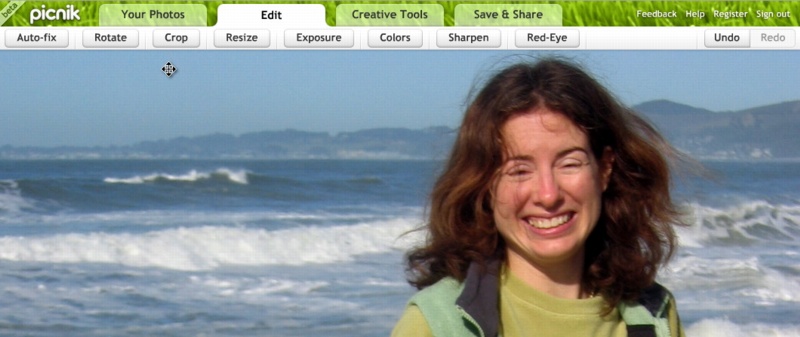
    • Multiple Flash-based image editing tools launched (FotoFlexer, Picnik)
    A lof of new tools for web development appear. Microsoft releases Silverlight, a direct Flash competitor. Adobe AIR allows developers to create a web applications that can be used as desktop apps. First usable image editing applications appear.

    2008

    web applications 2008
    Important events:
    • Adobe Photoshop Express launched
    • 280 Slides Launched (presentation app)
    • Preview version of JavaFX
    Adobe launches it's own image editing application build on top of Flash. First applications for creating presentations appear. Java releases a new software platform for creating web applications.

    2009

    web applications 2009
    Important events:
    • Mozilla Bespin launched
    • First Flash-based audio editor released from Aviary
    • Microsoft releases Silverlight version of Bing Maps
    • Google Chrome Frame released
    • Google OS announced
    • First preview release of Google Native Client
    Microsoft continues to push Silverlight and creates a new version of Bing Maps based on it. Bespin from Mozilla is the first web-based code editing application integrated with the source version control system. Also a first Flash-based audio editor is released by Aviary, which is perfect for non-professional use. Google Wave application which has an ambitious plans to become as common as email enters open beta.

    2010

    web applications 2010
    Things to watch:
    • Google Native Client
    • Google Chrome OS
    • HTML5
    I'm sure there will be a lot of exciting events this year. Google is planning to release a simple OS centered around web browsing and web apps. It is intended for netbooks, but will surely impact the web platform, by proving that the shift towards the web apps is already happening today.
    Another interesting tool, which Google is developing right now is a Native Client, a sandboxing technology which allows to run a native code from a browser without compromising security. Potentially, it will allow web apps to run a few magnitudes faster, removing the performance difference between web and desktop applications.

    Conclusion

    In conclusion, I would like to say that the web applications are undoubtedly growing fast and this trend will continue in the next years. Apps that were impossible a few years ago such as browser-based audio editing software are now good enough for non-professional use. Email, collaboration and project management web apps are starting to replace desktop applications.
    Tool for developing are becoming better. Microsoft tries to push his own Silverlight platform, Google is betting on the open standards. Adobe continues to develop Flash and Flex. And it will be exciting to see which platform for web development will advance the most in the next years.